Sanding & Grinding
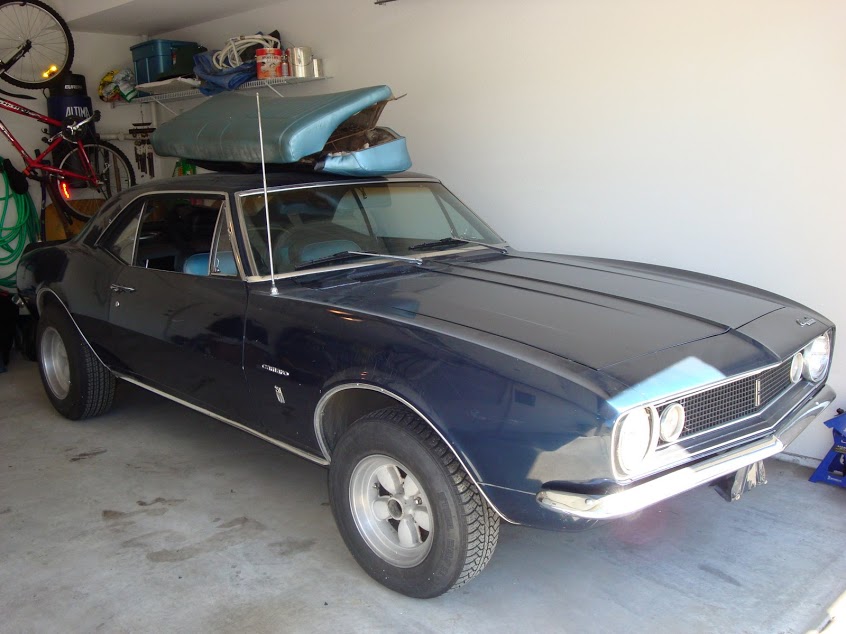
The dark blue paint was too far gone to salvage
In 2007, the Turbo Camaro project truly began. The paint was shot, and after consulting the wife, the DIY restoration became a reality. With a total sanding and painting budget of just $250, the goal was to save money while gaining a massive learning experience. Maaco might laugh at that budget, but time was plentiful even if cash was short.
The first few hours involved stripping the car of its jewelry: trim, antenna, door handles, gas cap, bumpers, lights, and grill. We even pulled all the glass. Initial attempts with 60-grit paper proved that hand-sanding would take a lifetime.
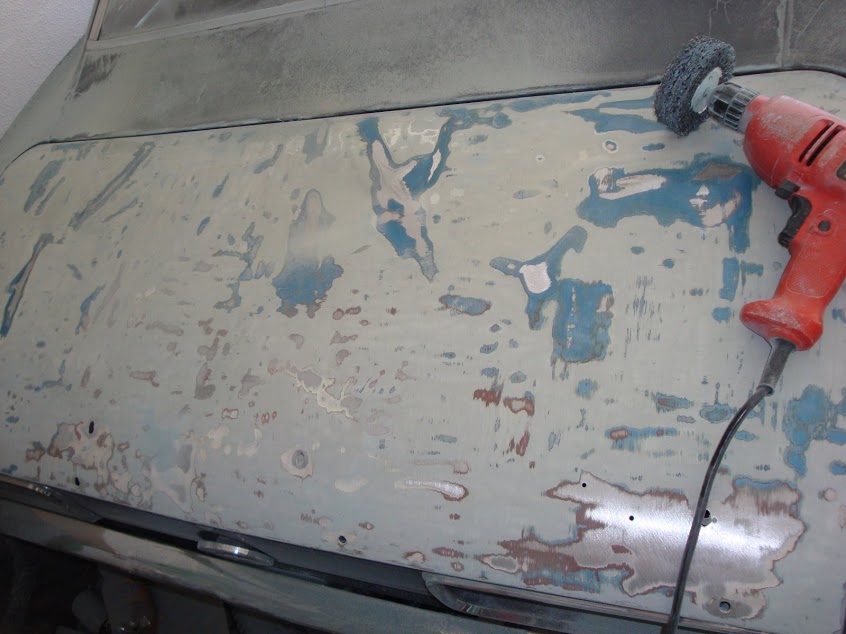
Sanding with a drill - slow and ineffective
We tried Sand & Rust Remover discs on a drill, but at $8 a piece, they were too fragile for a whole car. We eventually moved to a grinder with Poly discs, which handled about 40% of the car but struggled with the factory-original primer.
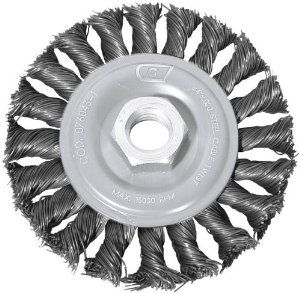
The solution: A heavy-duty wire wheel for the grinder
The “serious” phase involved a $20 wire wheel and cup for the grinder. It finished the job in 4 hours, but taught us three vital lessons about mechanical stripping:
- Safety is Non-Negotiable: The grinder flings paint chips and wire bristles like shrapnel. Wear long sleeves, eye protection, and a respirator. Do not skip the mask—paint dust is toxic.
- Heat Management: High-speed friction creates heat. Staying in one spot too long can warp the sheet metal. Keep the wheel moving and make multiple light passes.
- Contain the Chaos: This process creates an incredible amount of dust. We filled two ice cream buckets with paint dust. Use plastic sheeting to isolate your workspace or prepare to spend days cleaning your garage.
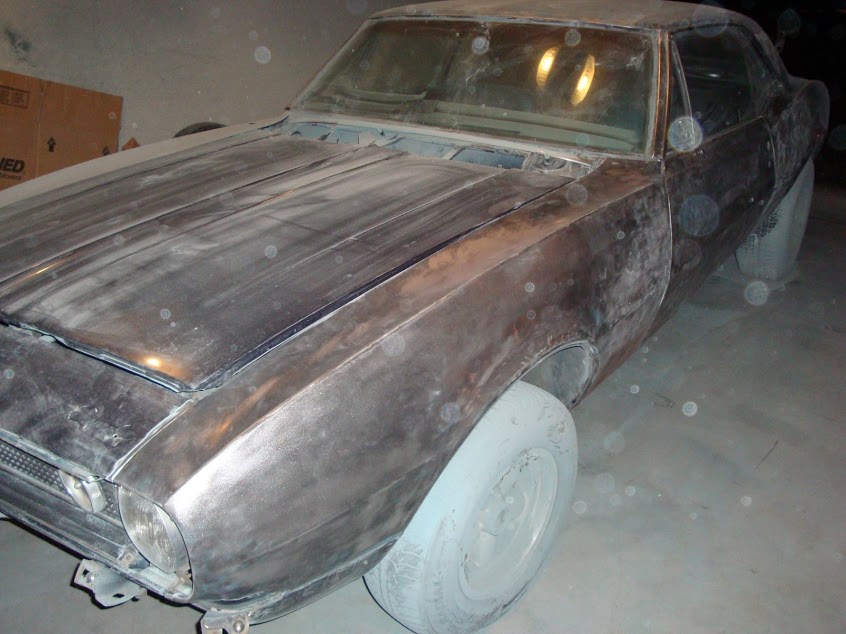
Stripped to bare metal and ready for the next phase
The hardest part wasn’t the grinding—it was the organization. Keeping every screw, gasket, and bracket in labeled zip-lock bags is what saved the project. If you’re doing this solo, you won’t remember where those door handle screws go a year from now.