Tremclad Reckoning: Prepping Again!
About nine years ago, I finished the rolled-on Tremclad paint project. Even though it took months of spare time, the results turned out better than expected. However, after being covered and stored for about three years, the truth came out. While the car looked decent when it went under the cover, the elements and condensation completely oxidized the finish. In areas where the paint was thin, it flaked away entirely, leaving the body in dire need of attention.
I never expected Tremclad to last forever, but the timing was terrible. My current savings were earmarked for the Mark II Engine Build, not a $20,000 professional body and paint job.
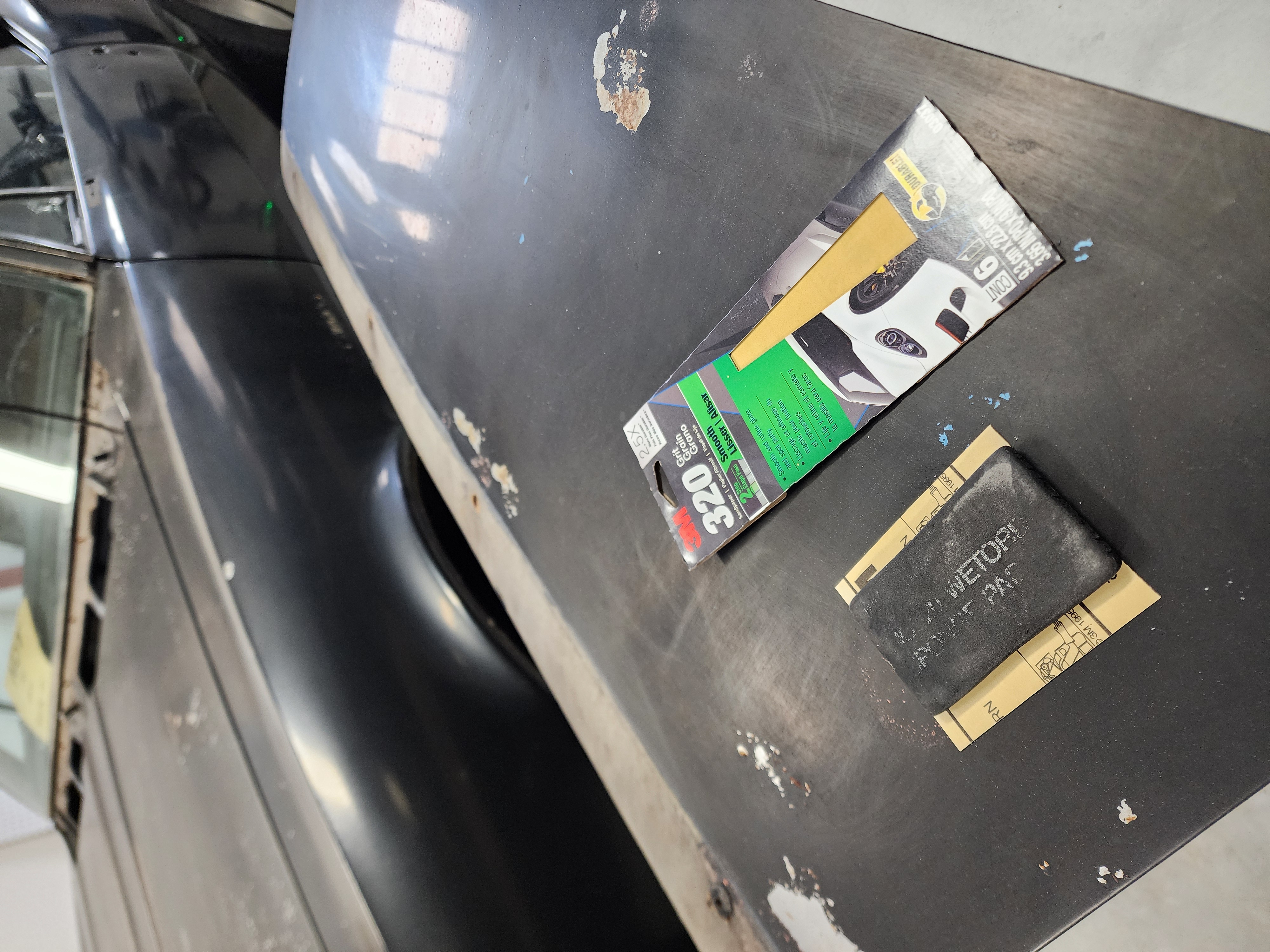
Starting the reclamation process on the trunk lid.
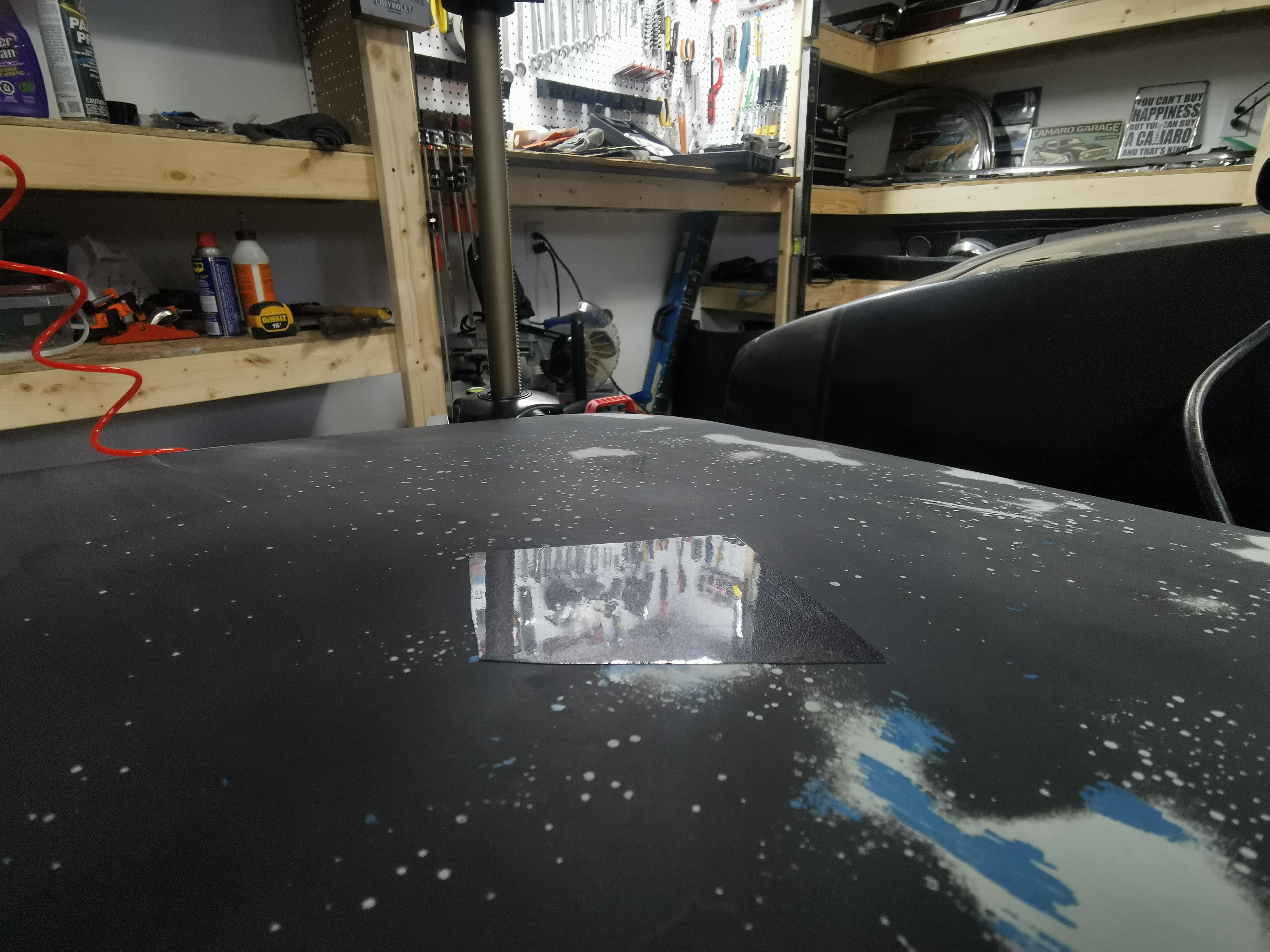
A close-up of the oxidation and flaking. The hardware-store enamel finally gave up. Note the square sample of Charcoal Candy Grey Vivid Vinyl Wrap on the lid.
I contemplated the options: repaint it myself, vinyl wrap the whole car, or park it long-term to save for a pro. The vinyl wrap seemed logical—it would look good and be cheap enough to rip off in 5-10 years. I started with the trunk lid, sanding it smooth with 600 grit before hitting it with spray-can epoxy panel primer. I had some issues with coverage and stubborn spots, but once it looked “wrap-able,” I moved on to the rest of the car. The stubborn spots should have been a tell.
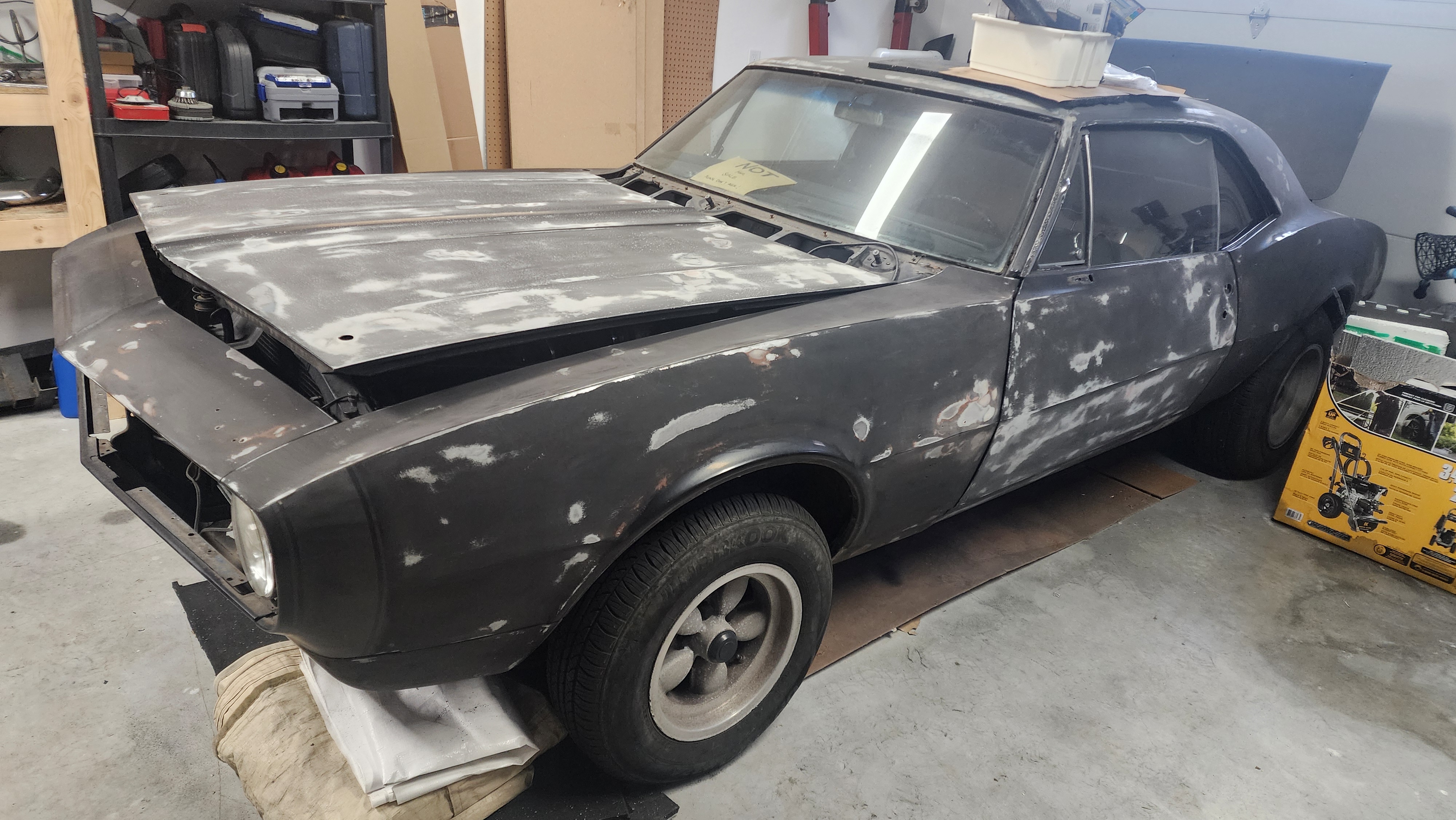
Panel by panel, I worked through the oxidation, doing skim coats and bodywork along the way.
I eventually sanded the entire car down to 600 grit. At this stage, we decided to forgo the vinyl wrap and keep that idea for decals or stripes later. Since I have experience with a spray gun, I figured there was no harm in spraying a proper epoxy primer and blocking it smooth myself.
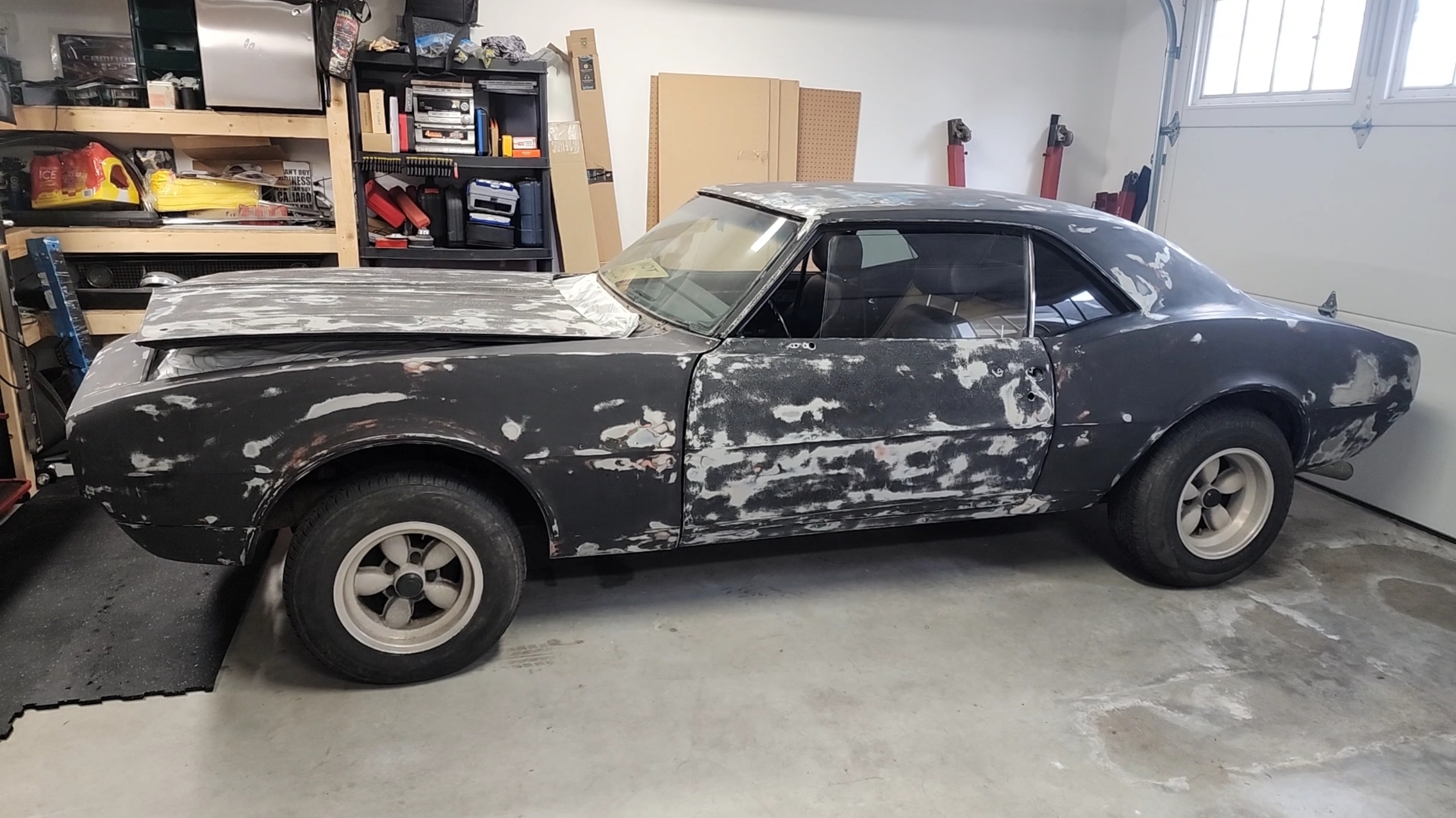
The car in its current spotty state. It’s smooth, but there is definitely more time and money to be spent before it’s ready for a final coat.
It is a massive amount of work, and certainly a detour from the mechanical upgrades, but you can’t rebuild the engine and drive around in a car that’s literally shedding its skin.