Epoxy Primer Incompatibility & Failure
After months of meticulous sanding and experimenting with spray-can epoxy primers, I was ready to throw down the final 2-3 coats of Black Epoxy Primer. I had prepped the garage, invested in a Fuji Mini-Mite 4 Platinum turbine system, and felt confident in the mechanical side of the spray.
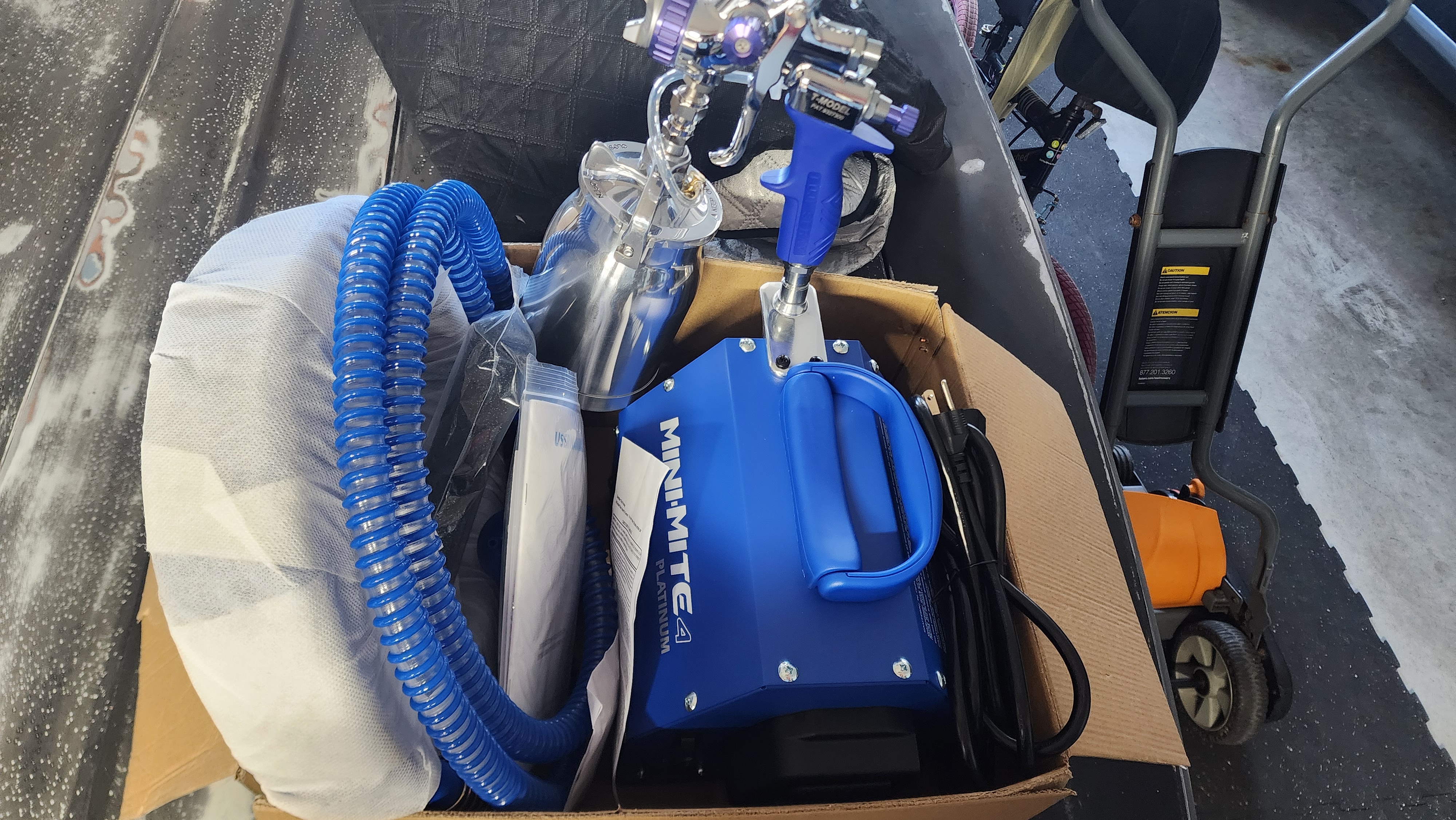
The equipment was top-tier, but the chemistry was against me.
Pro-Tip: The Fuji Mini-Mite 4 Platinum This unit is a beast for high-viscosity coatings. Its 4-stage turbine provides enough pressure to atomize thick epoxy primers without excessive thinning. It proved that it could produce a professional-grade finish—the mechanical application was nearly perfect before the chemical reaction took over. If you are spraying heavy primers or enamels in a home shop, a 4-stage system like this is the benchmark for avoiding “orange peel” caused by under-atomization.
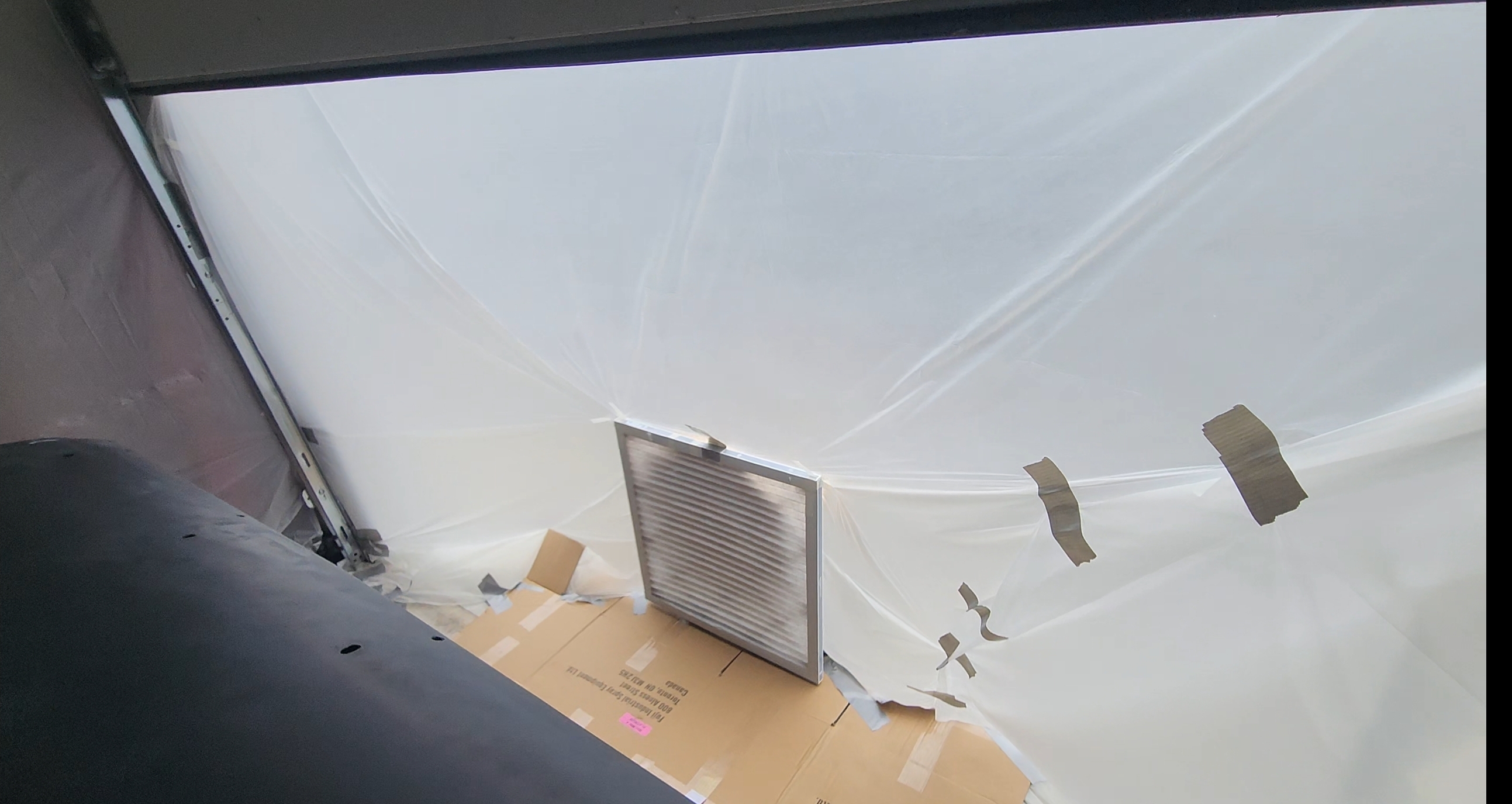
Setting up the ventilation with fans and filters to keep the garage as clean as possible.
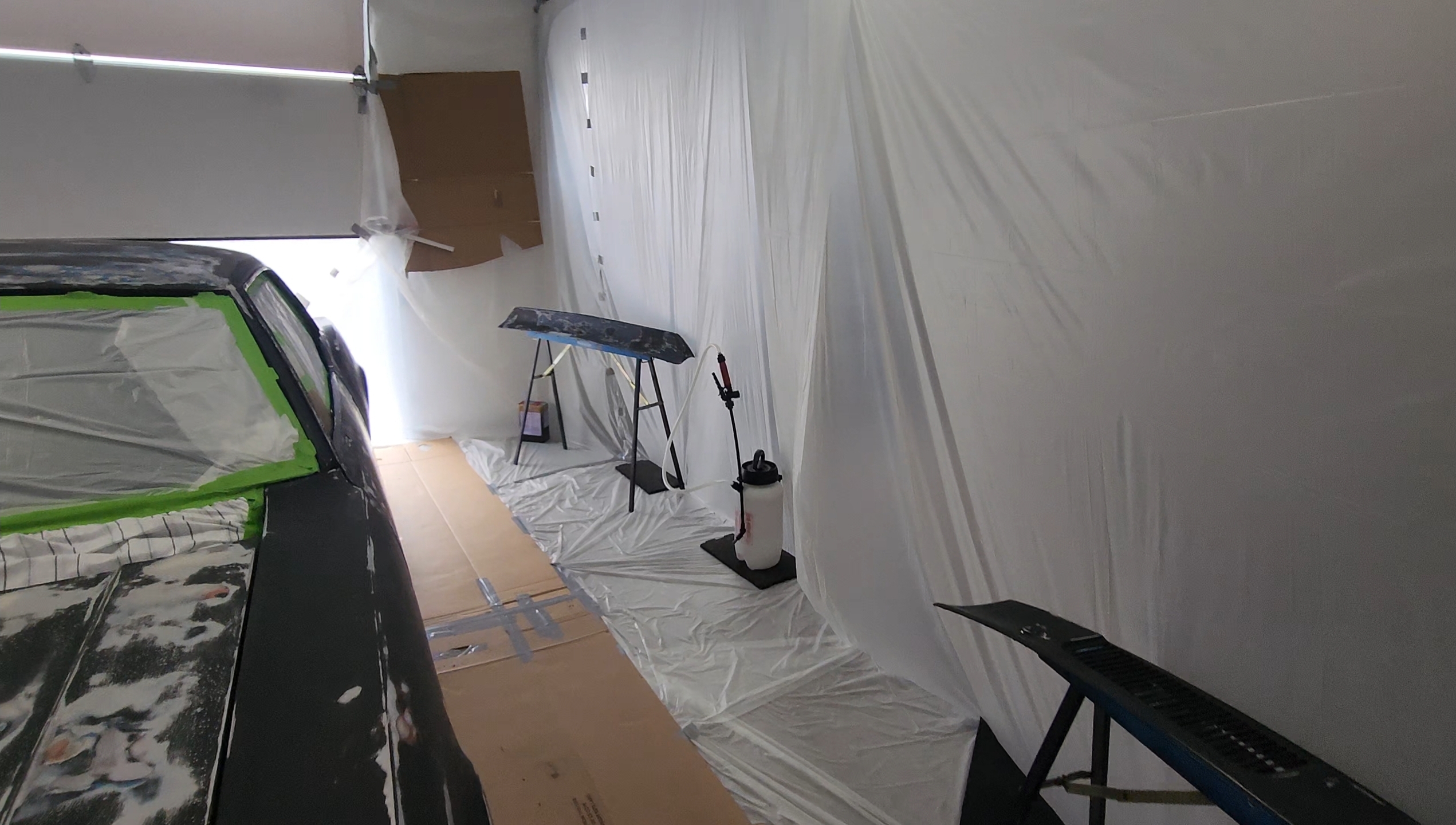
The DIY paint booth looked spacious and promising.
The black primer sprayed beautifully, but as it hit the surface, it reacted violently with the small, but sporatic spots of original Marina Blue lacquer and Red Oxide primer from decades ago. These old 1K coatings are easily softened by the strong solvents in modern 2K epoxy. Instead of a smooth finish, I watched in horror as the surface began to shrivel and wrinkle. An error was clearly made here, but in my defence, the trunk lid test didn’t have the same issue as it was sanded down to bare metal 10 years earlier.
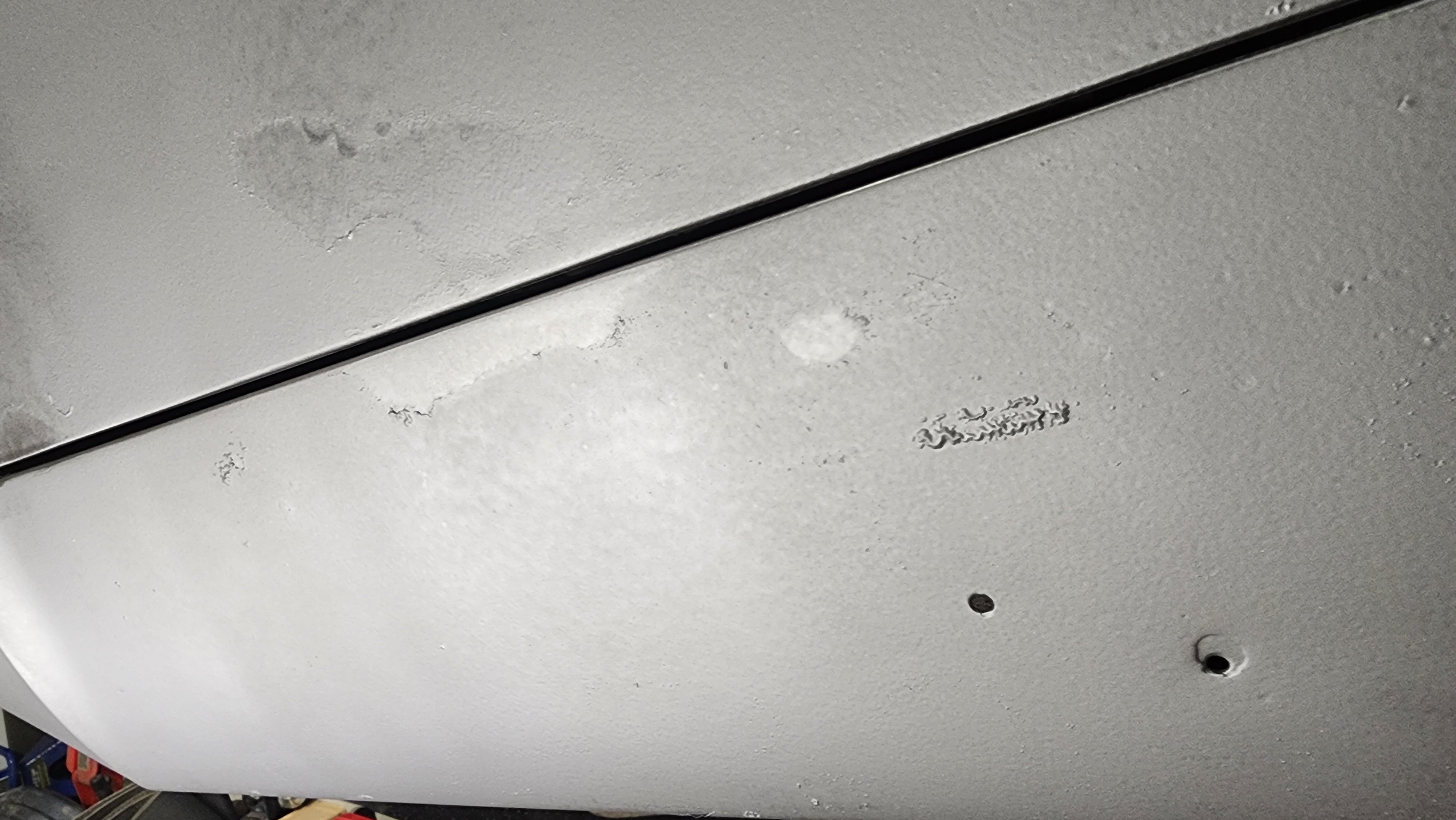
Immediate lifting and wrinkling. This is what happens when modern solvents hit vintage lacquer.
It was a tough lesson to learn after so much manual labor. I decided to push through with a second coat just to get the car into a consistent color and provide some protection from the elements, but the surface is a mess.
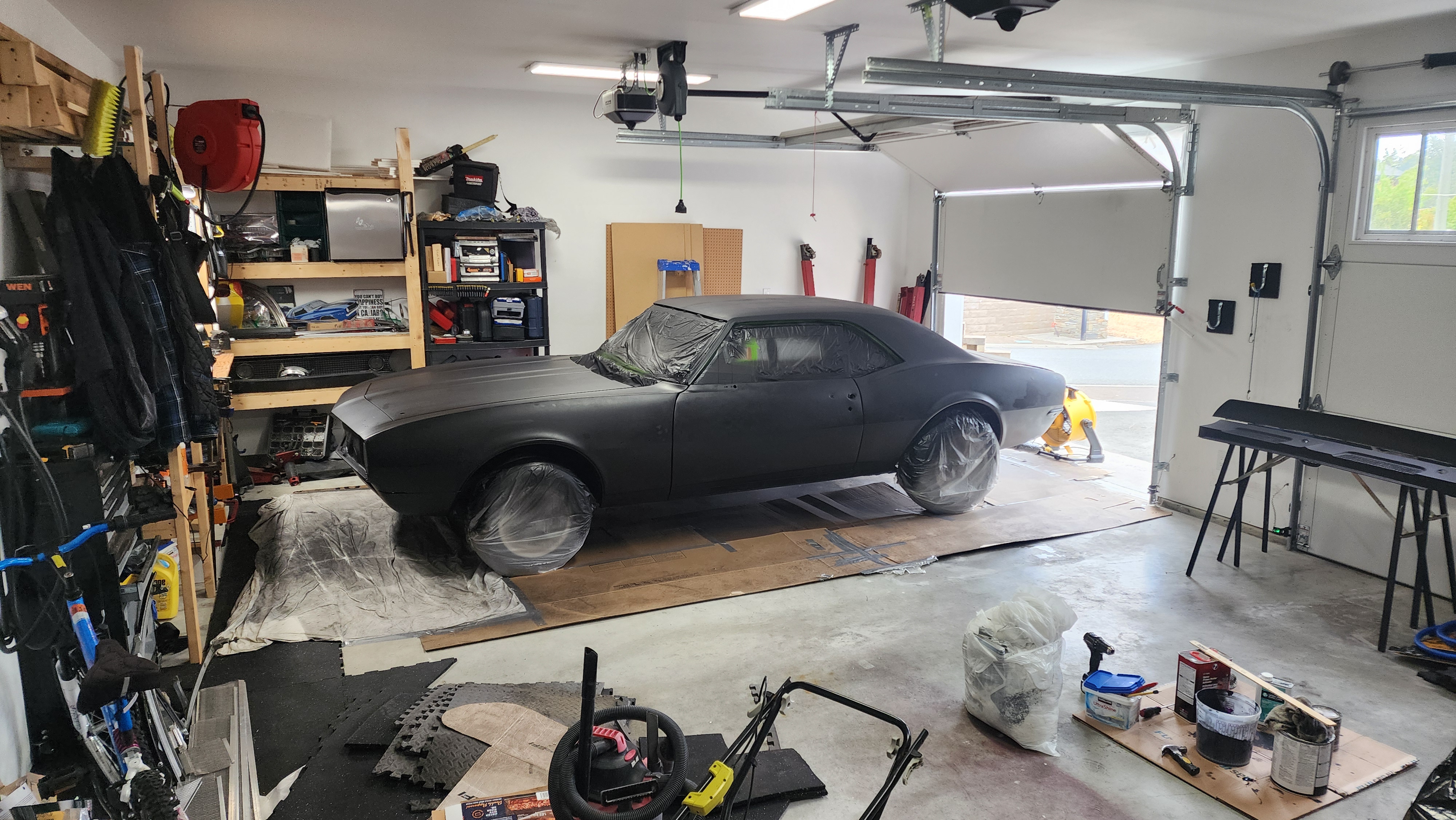
The Camaro is black for now, and looks half decent from 25 feet away.
The “all black” sinister look is a small consolation for the fact that it needs to be sanded back off. It’s an expensive detour, but the only way forward is to remove every trace of that old lacquer before trying again. Only time will tell when that can happen, but the sooner the better if you ask me.