Wrapping the Up-pipe and Down-pipe
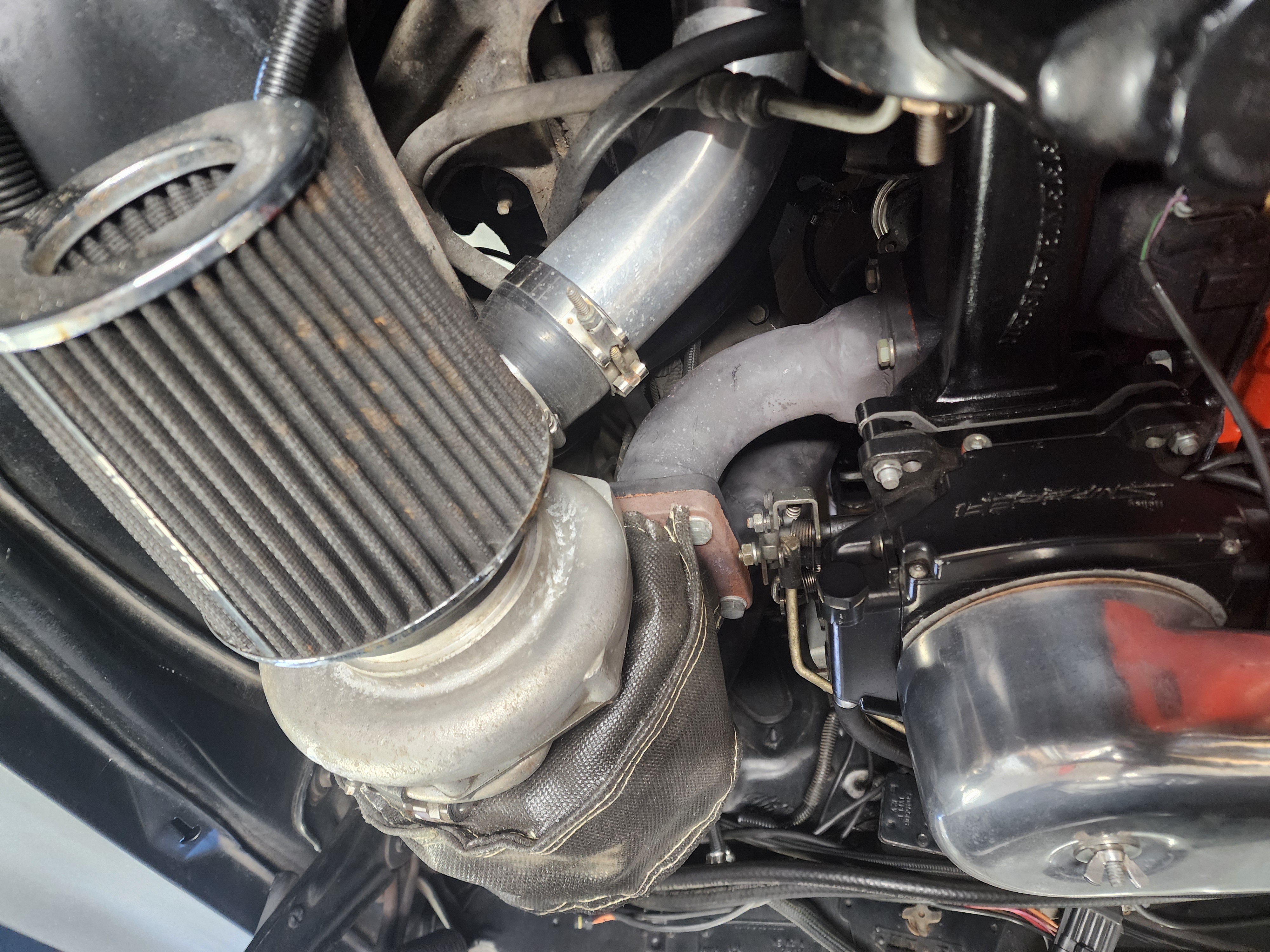
The newly designed up-pipe and down-pipe are ready for heat wrap.
With the Mark II engine build finally housing the reinstalled turbocharger, the redesigned up-pipe and shortened down-pipe needed a fresh thermal barrier. I sourced 33 feet (10m) of 2-inch Titanium Exhaust Heat Wrap by Aopule. The material felt high-quality and was surprisingly easy to work around the tight bends of the custom piping.
Material Math
The up-pipe is roughly 9 inches long and 2-3/4 inches wide. It consumed about 7 feet of wrap using a 50% overlap and a full anchor wrap at each end. For the down-pipe, I wrapped about 18 inches down the 3-inch main pipe and continued onto a short 4-inch section of the 2-inch wastegate pipe. This section took another 15 feet. In total, I used roughly 22 feet of the 33-foot roll.
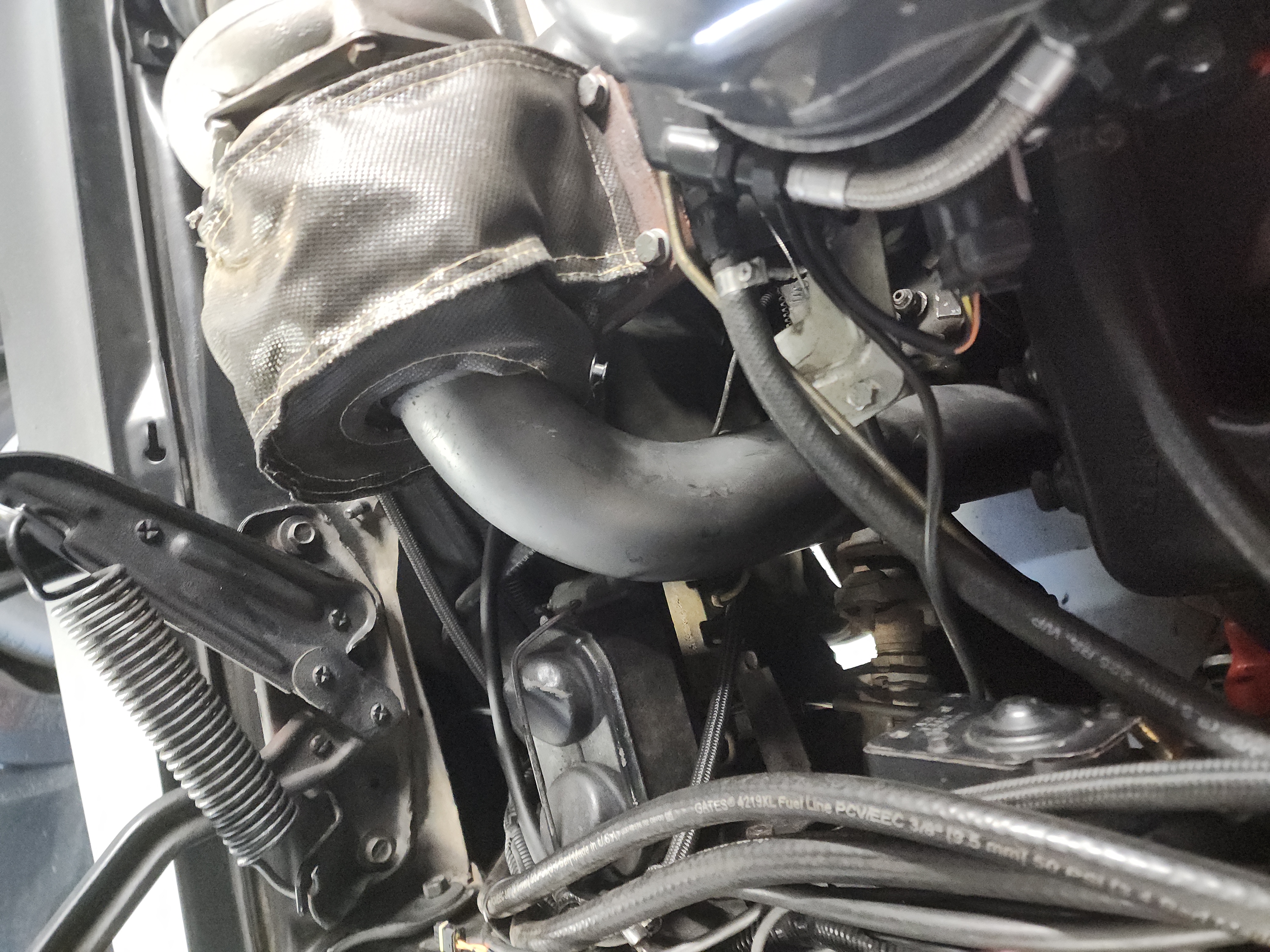
The back of the turbocharger looking at the down-pipe as it heads toward the Wastegate outlet.
Why We Wrap
In a cramped ‘67 Camaro engine bay, a turbocharger is a massive heat sink. Wrapping these pipes serves two critical functions:
- Engine Bay Protection: The down-pipe passes dangerously close to the brake master cylinder and fuel lines. The wrap significantly reduces radiant heat that could otherwise boil brake fluid or cause vapor lock.
- Turbo Efficiency: Exhaust gas is the energy that drives the turbo. By keeping the heat inside the pipe, the gas remains expanded and retains higher velocity, which can lead to slightly faster spool times.
Safety Note: I wore a mask and double-gloved for this, but the fiberglass fibers still got into the air and caused some serious itching. Always work in a well-ventilated area and consider wearing disposable long sleeves to protect your wrists and forearms.
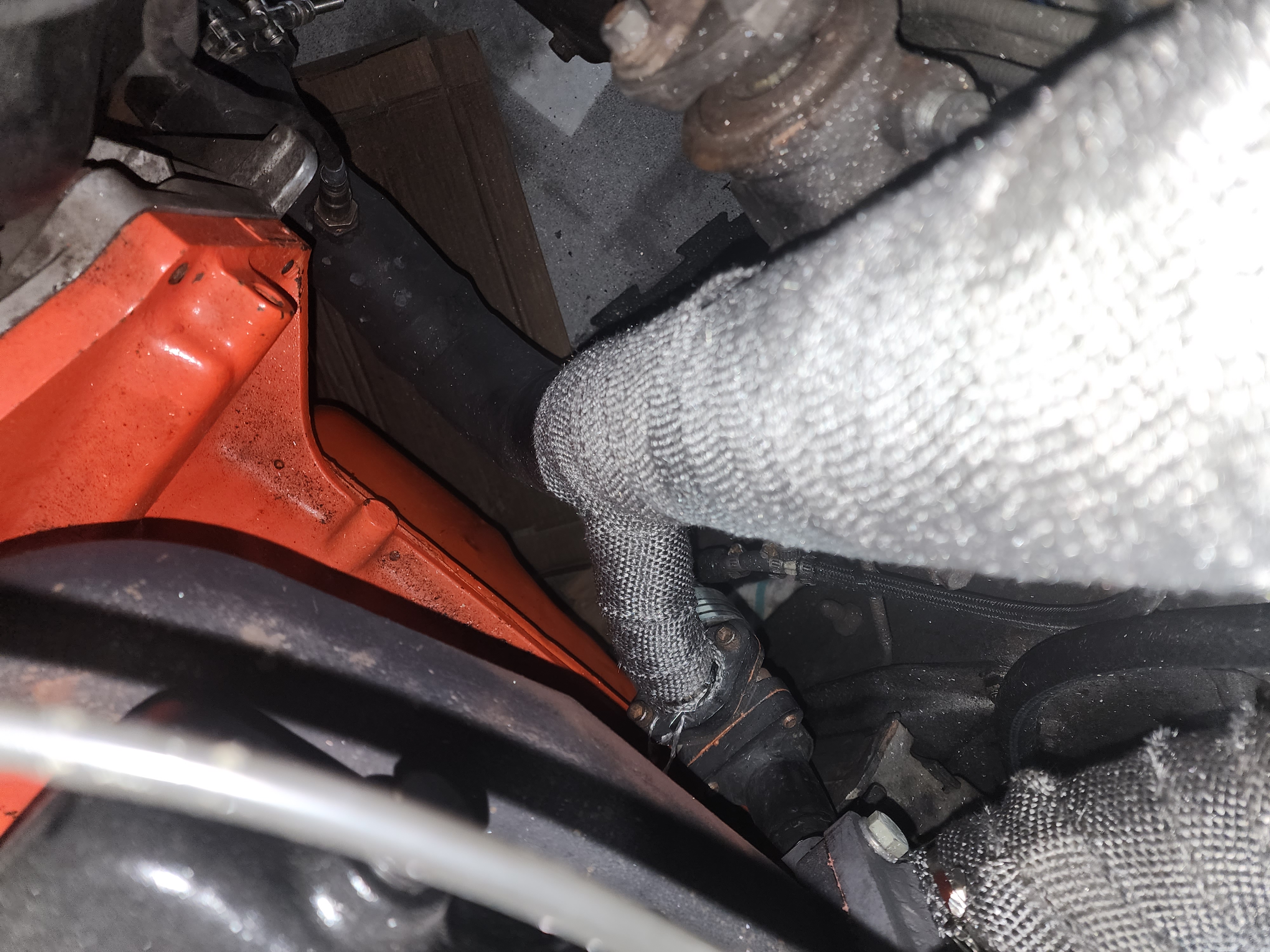
The down-pipe is fully wrapped just past the Wastegate outlet. The stainless zip tie keeps the wrap tight at each end of the run.
Pro-Tip: While you can buy a specialized ratchet tool to tighten these stainless steel ties, you can get a tight finish with needle nose pliers. Grab the loose tail and roll the pliers toward the tie’s head to leverage it tight. I wasn’t able to hide the heads on this run as a result of them being too secure to rotate.
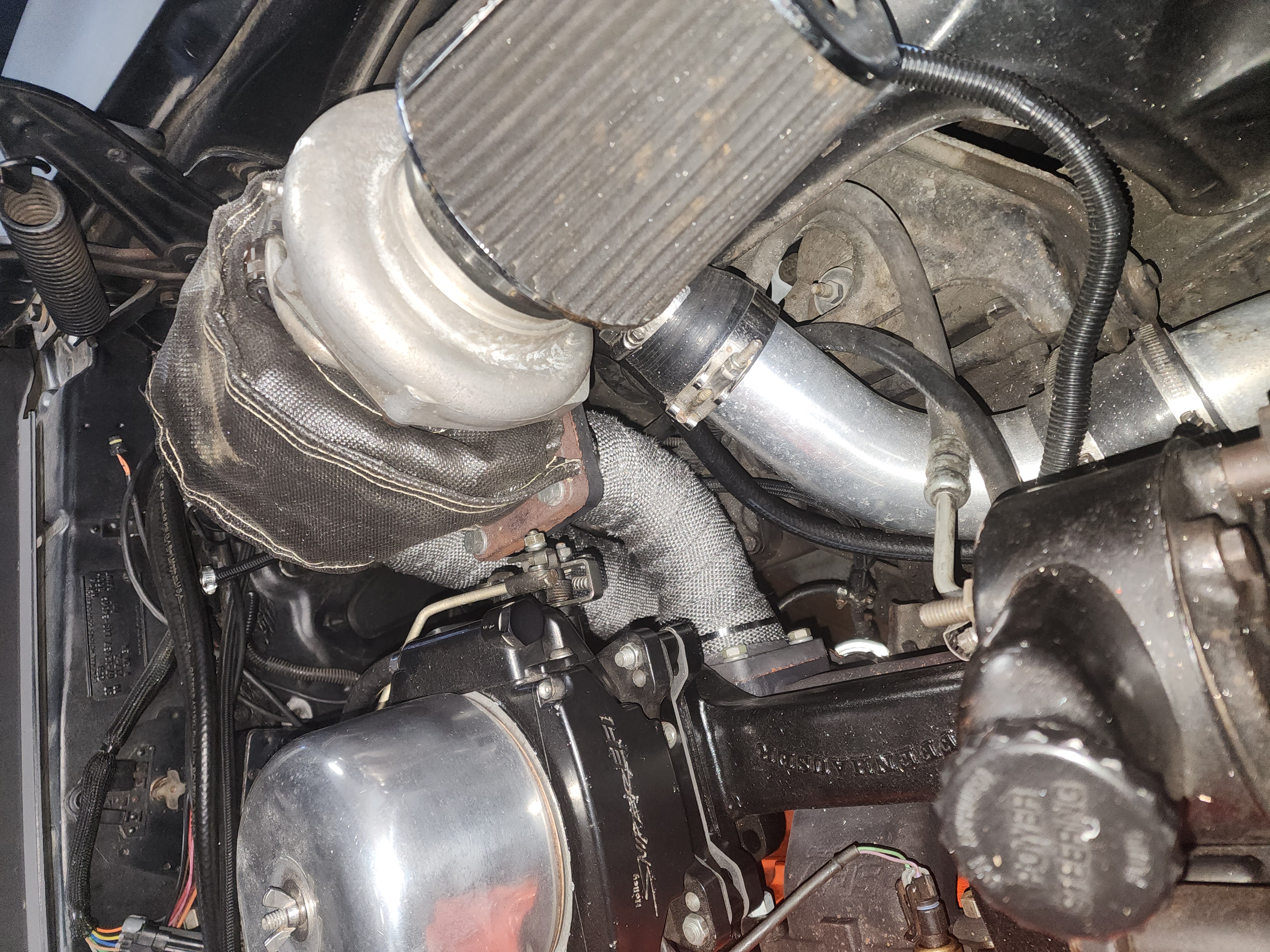
The up and down pipe are fully wrapped and ready to smoke for 20-30 minutes of driving to “bake” in place.