Engine Build #1: A Costly Failure
Ever since the initial break in of the engine redone by Thompson Machine, I noticed an unusual amount of black smoke. After getting tired of the constant cloud behind the car, I pulled the valve cover and found damaged valve stem seals. I replaced them and checked again a few weeks later, only to find the new seals already chewed up. I contacted Thompson Machine, and they were adamant that the custom Comp Cams specs were referenced when they ground the guides and installed the valves and springs. I had my doubts.
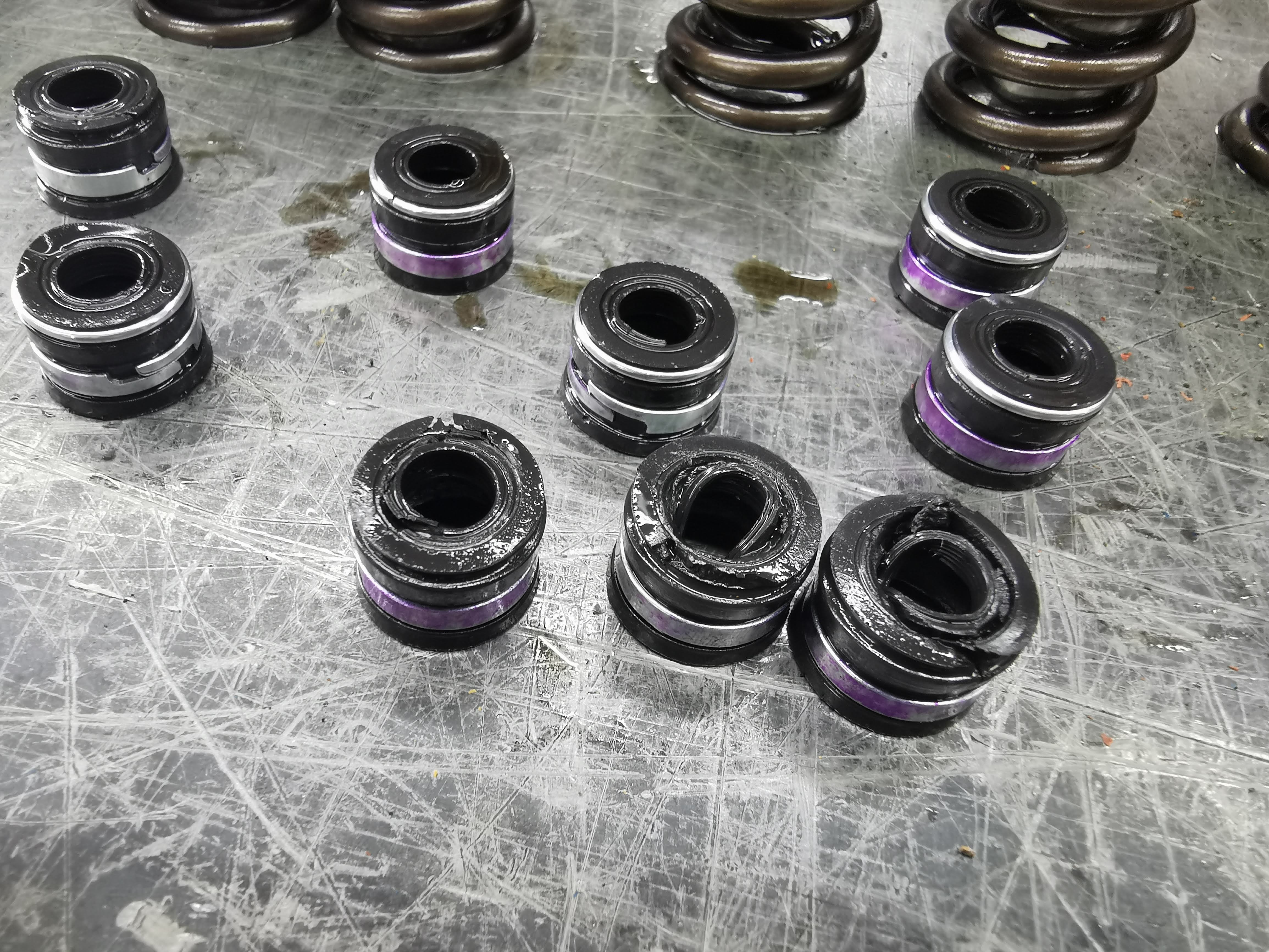
A pile of shredded valve stem seals. This was just the beginning.
I really only drove the Camaro on weekends, swapping seals regularly, before I eventually decided to pull the plug and stop driving it altogether. When I finally tore the block apart, the hard truth came out. The shop clearly ignored the camshaft specs, leading to the seal failure, but that wasn’t even the worst part.
Between seal swaps I started to question the bottom end and I borrowed a compression tester from a friend and got the following results:
| Cylinder | Compression (PSI) | Leak-Down (%) |
|---|---|---|
| #1 | 141 | 3.5% |
| #2 | 141 | 4.5% |
| #3 | 141 | 4.5% |
| #4 | 141 | 5% |
| #5 | 146 | 5% |
| #6 | 146 | 4% |
The consistency in these numbers was enough to fool almost anyone. Typically, seeing less than a 5% variance across all six cylinders suggests a rock-solid bottom end. In a future machine shop teardown it was determined these “good” results were just a mask for consistently bad pistons due to using the wrong oil rings.
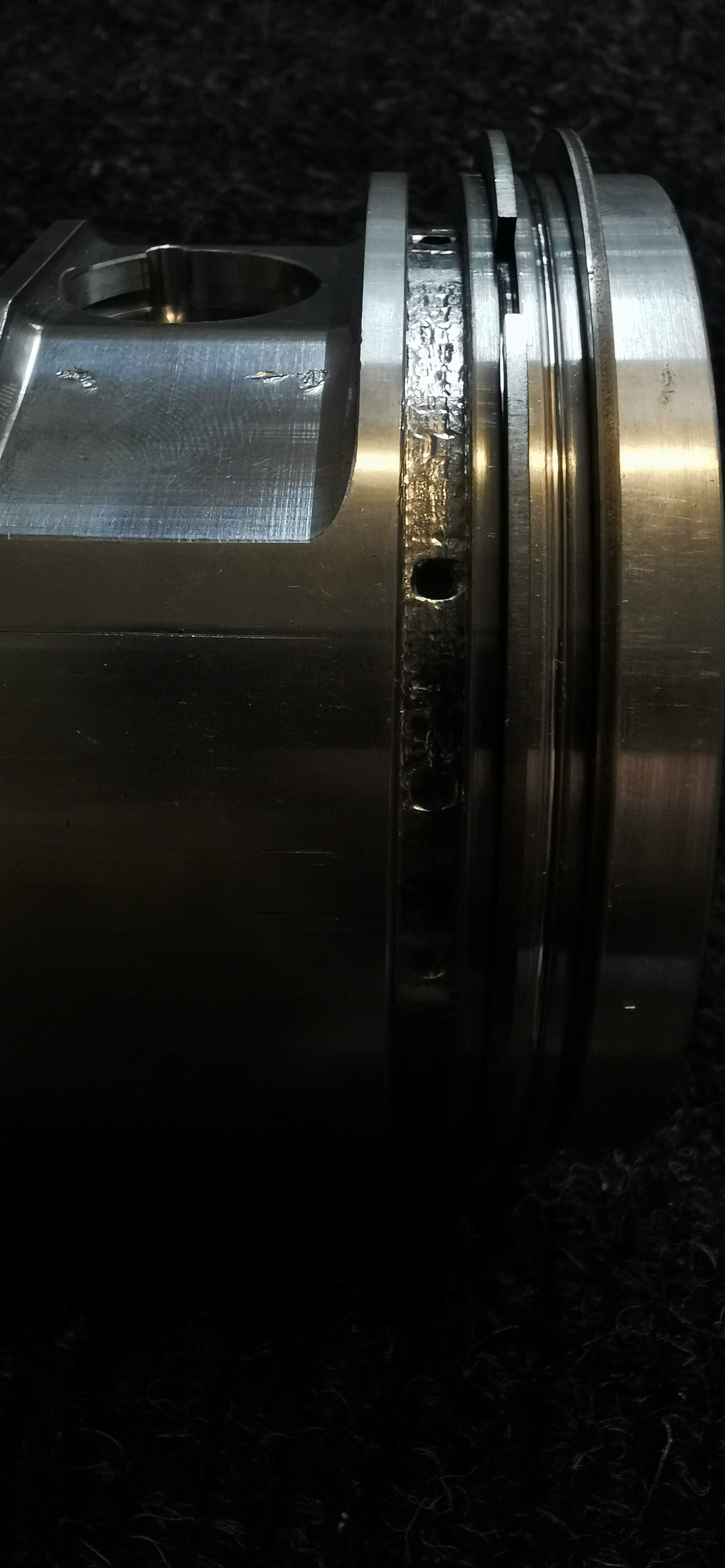
Scoring on the inside of the oil ring groove on the Ross Racing Pistons.
The wrong oil rings were used on the Ross Racing Pistons. This mistake destroyed the pistons and allowed excess oil to dump into the combustion chamber, which explained the smoke. When I took these findings back to Thompson Machine, they refused to honor any kind of warranty and wouldn’t admit that they failed to reference the CompCams spec card for the top end, or the supplied rings for the bottom end.
As for the engine, I continued to drive it until the end of 2019 when it was parked for storage awaiting big decisions.