Drilled Crank & ARP'd Rods
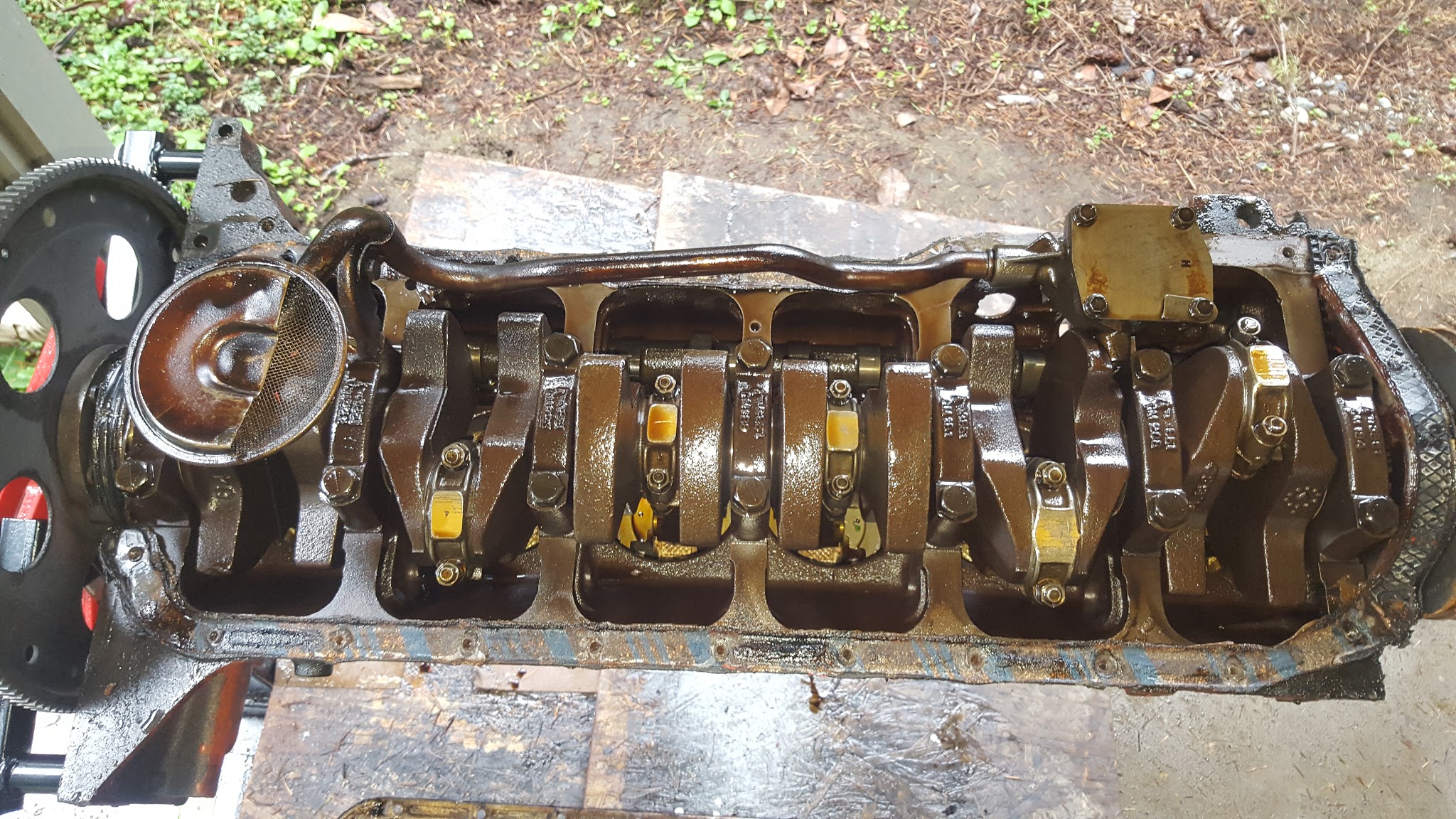
Stock crank and connecting rods - taken during disassembly
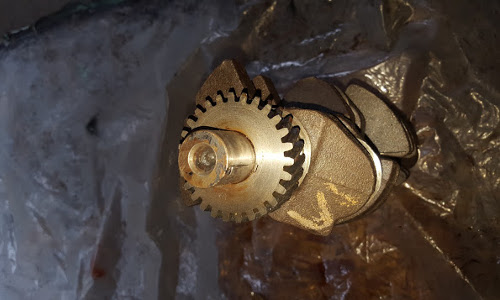
Stock hole in end of 250 crank - needs some threading
The Chevy 250 is a very robust motor, built for durability and economy. Luckily that durability transferred to most of the internal components. The cast crankshaft and forged connecting rods have been known to handle 500-600HP without issue. There are probably some people who have managed to break one or the other at 450HP, but there are also others who have made it to 700HP+, so let’s stick with averages.
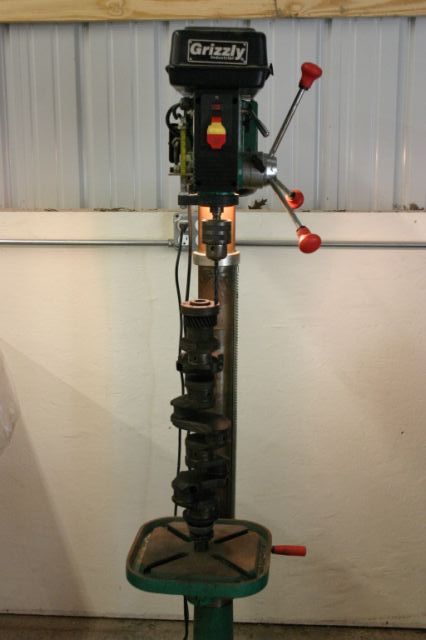
Drilling & tapping the crank nose
Turbo Camaro is expecting to initially dyno near 350HP and a similar amount of torque. The stock crankshaft will be used but not until after polishing, balancing, and the nose is drilled/tapped. The machine shop will use a 25/64 drill bit and a 7/16 x 20 tap. This process allows the use of a balancer puller/install tool and a retaining bolt after assembly.
The machine shop confirmed the stock forged rods were mint and were needed to balance the rotating assembly. The weak link with the stock rods are the bolts holding them to the crank. For this build, ARP rod bolts will be used to make the rods near bulletproof.
Overall, these two parts are good without any modifications, but a few dollars spent on them can make them great.
If you have any questions or comments please feel free to contact us via one of our social media channels.